



Construction Management Services in Iraq with Site Supervision: What Buyers Should Expect
- Clear control of schedule, cost, quality, and HSE through defined workflows and active site supervision.
- Documented decision-making and change control so variations and approvals are traceable and claims risk is reduced.
- Daily coordination across subcontractors and suppliers to prevent interface clashes, rework, and work stoppages.
- Auditable reporting and tracking (daily, weekly, monthly) tied to measurable progress, constraints, and required client decisions.
- Resource and logistics readiness (labor, equipment, materials and import planning) to protect productivity in Iraq’s operating environment.
These expectations create a practical standard: you should be able to see what’s happening on site, what’s blocking progress, who owns each action, and what decisions are needed to keep the schedule moving.
For enterprise and mid-market buyers, the delivery model you choose often determines whether the build stays predictable or becomes an expensive surprise. When you invest in a facility, housing, warehouse, clinic, or commercial project, you need more than a contractor on site. You need structured control, clear accountability, and evidence-based reporting. This is where construction management services Iraq becomes a practical model: it brings planning discipline, on-site supervision, and governance that helps owners make timely decisions and protect budget and schedule.
In Iraq’s operating environment, where logistics, labor availability, and multi-vendor interfaces can change quickly, buyers should expect a management approach that is firm on standards and flexible on execution details. Below, you’ll find what construction management and site supervision should include, what deliverables to request, and how Aldhaman supports delivery certainty with in-house resources and proven controls.
Construction Management Services Iraq: Scope, Roles, and Accountability

Construction management in Iraq is a structured service that controls execution on behalf of the owner, without automatically taking full design liability unless that scope is explicitly contracted. In practice, it covers planning, procurement support, execution control, quality assurance, HSE oversight, cost management, and schedule control across the full construction lifecycle. It also includes contractor coordination between subcontractors and suppliers, and the daily on-site decision flow that prevents small issues from becoming major delays.
What it does not cover by default is taking responsibility for design errors, redesign, or professional design liability, unless the same firm is contracted for design and engineering services under a clear agreement. For buyers, the core expectation is straightforward: the construction manager runs a disciplined process, documents decisions, and provides transparent visibility so the owner stays in control.
Decision rights and governance (how accountability is enforced)
Accountability depends on governance, not goodwill, so decision rights must be agreed early and enforced consistently. Buyers should define who approves changes, who signs off on milestones, and what evidence is required for acceptance, such as test results, inspection records, or measurable quantities completed. A strong construction management setup also clarifies who can issue site instructions, who reviews and approves method statements, and how disputes are escalated.
Without this structure, rework increases, informal changes spread, and schedule drift becomes difficult to recover. In well-run projects, accountability is enforced through documented approvals, formal change control, clear sign-off points, and reporting that ties progress to measurable outputs.
When construction management is the right model (vs. general contracting)
Construction management services Iraq is the right model when an owner needs strong control over multiple packages, vendors, or interfaces, while still keeping commercial flexibility. This is common in industrial facilities, logistics compounds, healthcare buildings, and large residential developments where civil, structural, MEP, finishing, and specialist systems may be split across different subcontractors.
It is also a strong fit when timelines are tight and you need fast decision cycles supported by reliable site management Iraq and construction supervision Iraq, not reporting that arrives only after problems occur. Buyers who have internal engineering or procurement teams often prefer this model because it improves visibility and keeps approvals aligned with corporate governance. In contrast, general contracting can be simpler when scope is straightforward and the buyer wants a single lump-sum execution responsibility, but transparency can drop if reporting and change control are weak.
| Model | What it typically means | Best fit when | Day-to-day difference buyers feel |
|---|---|---|---|
| Construction management | Manages and controls execution on behalf of the owner across packages, vendors, and interfaces; runs governance, documentation, and measurable reporting. | Multiple subcontractors and vendors or complex interfaces; tight timelines; owner wants stronger visibility and decision control. | More transparency: consistent record of what was planned, completed, changed, and the impact on time and cost. |
| General contracting | One contractor executes the works under a defined contract scope, often lump-sum or unit-rate. | Straightforward scope; buyer prefers single execution responsibility. | Simplicity can be higher, but transparency can drop if reporting and change control are weak. |
Deliverables buyers should demand from day one
Construction management works best when deliverables are defined early, measured consistently, and shared in a format your team can use. Buyers should request a complete project controls package at the start, not midway through execution. Early baselines set the performance standard and reduce claims risk. These documents also protect management teams internally by creating auditable records for procurement, finance, and executive stakeholders.
Checklist: Baseline schedule with clear logic, milestones, and critical path (aligned to procurement lead times and mobilization); risk register with owners, mitigation actions, and review dates; approved method statements for major activities tied to sequencing and access requirements; QA/QC plan including inspection and test plans (ITPs), hold points, and acceptance criteria; HSE plan covering induction, permits, toolbox talks, and incident reporting requirements; reporting cadence defining daily logs, weekly updates, and monthly executive summaries.
In practice, these deliverables become your control system: they define how the site will run, how progress will be measured, and what “approved” actually means at each step.
Aldhaman’s execution advantage in Iraq
Aldhaman’s approach is built for the realities of Iraqi project delivery: reduce dependency, mobilize fast, and keep work moving even when external constraints appear. We bring our own heavy machinery and a workforce of over 1,800 people, which improves productivity and reduces delays caused by third-party availability.
For large sites, worker accommodation is not a “nice to have.” It directly affects attendance, start times, fatigue, safety, and continuity, especially when projects are outside major city centers. We also support material import to prevent stoppages when local supply is constrained or inconsistent, and we manage lead times in a structured way so procurement supports the schedule, not the other way around. Combined with local experience and international execution standards, this gives buyers clearer predictability on delivery and fewer gaps between plan and site reality.
Site Management Iraq: On-Site Controls That Prevent Delays and Rework

Strong site management Iraq is where schedules are protected, costs are contained, and quality becomes repeatable. It is not only about having supervisors on site; it is about controlling workface readiness, access, materials, manpower, and permits so crews can work without avoidable interruptions.
Daily routines should include coordination meetings, task handovers, safety checks, and progress measurement against short-term targets. When site management is weak, failure points show up quickly: labor waiting for materials, late RFIs that block work fronts, poor sequencing between trades, and unsafe shortcuts that lead to incidents or rework. In Iraq, where logistics and interfaces can be complex, disciplined site management creates stability and allows recovery actions before slippage becomes permanent.
Work planning and sequencing on active sites
Effective sites run on short-interval planning: daily and weekly plans that translate the master schedule into executable work packages. The weekly plan should confirm that work fronts are ready, drawings are approved, materials are available, and access is secured before labor is committed.
Daily planning then adjusts for reality, such as weather, deliveries, inspections, or interface changes, without losing the overall schedule logic. This link between short-interval plans and the master schedule is critical because it provides early warning when productivity drops or constraints increase. When used consistently, buyers see fewer surprises and more measurable progress that holds up in reports and in construction reporting and tracking.
Quality and HSE supervision on the ground
Quality and safety supervision protect both reputation and schedule, because rework and incidents are among the fastest ways to lose time and trigger unplanned costs. Buyers should expect a clear inspection workflow with defined hold points, test requirements, and sign-offs for each major activity, supported by documented records.
On the HSE side, effective supervision means operational controls: inductions, toolbox talks, permit-to-work management, and stop-work authority when conditions are unsafe. Good supervision also focuses on behavior and housekeeping, not only paperwork, because many hazards come from poor access control, cluttered work areas, and rushed sequencing. When quality and HSE are treated as daily systems within construction supervision Iraq, outcomes become more predictable and less dependent on individual effort.
Resource readiness: equipment, labor, and accommodation
Resource readiness is often the hidden reason projects slow down, especially when equipment is rented late or labor mobilization is fragmented. Aldhaman’s owned heavy machinery reduces waiting time and improves control over critical activities like earthworks, lifting operations, and material handling.
With a large in-house workforce, we can scale teams up or rebalance manpower across work fronts without losing days to external sourcing. Worker accommodation improves attendance, reduces commuting risk, and supports stable shift planning. For buyers, this typically translates into faster mobilization, fewer stoppages, and more consistent productivity.
Material availability and import planning
Material flow is one of the most common schedule drivers in Iraq, especially for specialized items, finishing packages, and MEP components that may have long lead times. A strong approach starts with procurement planning linked to the baseline schedule, including submittals, approvals, manufacturing, shipping, customs steps, and on-site storage requirements.
Import planning is not just ordering early; it requires lead-time tracking, vendor communication, and contingency options if a shipment is delayed or a specification changes. Buyers should also expect controls for receiving inspections, storage conditions, and traceability so materials are not damaged or lost before installation. Aldhaman’s material import capability supports continuity and reduces dependence on uncertain local supply when the project cannot afford downtime.
Contractor Coordination: Managing Subcontractors, Suppliers, and Interfaces
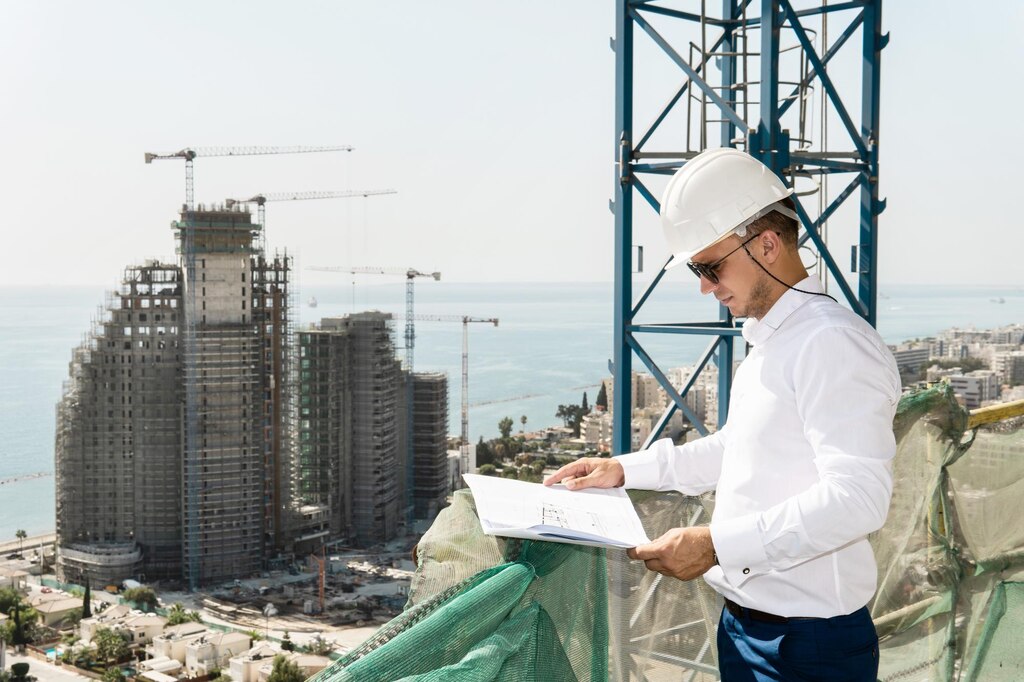
On enterprise projects, success depends on how well subcontractors, suppliers, and specialist vendors are coordinated, not on individual performance in isolation. Contractor coordination covers scope alignment, interface management, document control, and daily collaboration between trades so work is sequenced correctly and handed over cleanly.
This includes managing shop drawings and submittals, ensuring materials match approvals, and confirming that prerequisites are completed before the next trade starts. Buyers should also expect a clear escalation path for issues, with decisions documented and tracked until closure. When contractor coordination is handled professionally, the owner gains cost and timeline protection because problems are identified early, responsibility is clear, and evidence is available if disputes arise.
Subcontractor onboarding and compliance controls
Subcontractor onboarding should be treated as a controlled process, not a quick commercial transaction. Buyers should expect pre-qualification checks on capability, safety performance, staffing, and relevant experience, especially for high-risk or specialist scopes.
Scope clarity is equally important: deliverables, boundaries, and interfaces should be written clearly to prevent gaps or overlaps that later become variations. Method statements and risk assessments should be reviewed and approved before work starts, and every subcontractor should complete site induction with clear rules for permits, access, PPE, and reporting. When onboarding is done correctly, site performance improves because expectations are aligned and compliance is enforceable.
Interface management between trades
Interface clashes between MEP, civil, structural, and finishing works are a common cause of rework, especially when drawings, openings, sleeves, supports, and access zones are not coordinated. Good interface management uses planned handover points and disciplined checks before closing walls, pouring concrete, or proceeding with finishes.
It also depends on shop drawing control and field verification, with clear responsibilities for who checks what and when. Site coordination meetings should stay focused on constraints and handoffs, so each trade leaves with specific actions and deadlines. For buyers, strong interface management means fewer change requests, cleaner handovers, and better quality at final inspection.
Change control and claims prevention
Changes are normal, but uncontrolled changes are where budgets and timelines are lost. Buyers should expect a formal change control system that documents variation requests, site instructions, technical clarifications, and any impact on time or cost with evidence.
The goal is not to block changes; it is to ensure every change is approved by the right authority, priced fairly, and integrated into the schedule. Clear records, including drawings, photos, correspondence, and daily reports, also reduce disputes because facts are traceable. When change control is consistent, management teams can make decisions with confidence and avoid last-minute surprises during closeout.
Procurement and logistics coordination for enterprise projects
Enterprise buyers often want fewer interfaces, simpler accountability, and consistent standards across vendors. Combining services can reduce risk: when general contracting, project management, and material import are coordinated under one execution strategy, deliveries align better with the schedule and site priorities.
Aldhaman supports this approach by integrating procurement planning with execution control, so ordering, logistics, and installation readiness are managed as one system. It also reduces coordination effort for the buyer’s team, because escalation paths are clearer and reporting is consolidated. The result is improved delivery certainty, especially on projects with tight timelines or complex supply chains.
Construction Reporting and Tracking: Transparent Progress, Costs, and Risks

Buyers should treat reporting as an operational control tool, not a monthly formality. Strong construction reporting and tracking provides measurable progress, schedule updates, cost forecasting, risk management, and issue tracking in a format that supports decisions.
This matters for enterprise governance because procurement, finance, and executive stakeholders need auditable records, not opinions or vague percentages. A good system also highlights constraints early, such as late approvals, missing materials, and access conflicts, so corrective actions can be implemented before the critical path is affected. In Iraq, where external factors can change quickly, disciplined reporting creates the stability that owners need to protect outcomes.
Construction supervision Iraq: inspections, approvals, and sign-offs
Construction supervision Iraq should follow a clear workflow that connects field inspections to approvals and milestone acceptance. Buyers should expect checklists tied to specifications, NCR (non-conformance report) management when issues occur, and documented corrective actions with verification before closure.
Sign-offs should be based on evidence such as inspection records, test results, and measurable completion, not informal confirmation. This protects the owner at handover because the acceptance trail proves what was built and how it was verified. When supervision is disciplined, quality becomes more consistent and end-of-project disputes are reduced.
Weekly and monthly reporting packs (what’s inside)
Reporting packs should be consistent so your team can compare week to week and month to month without re-learning the format. Weekly reporting should support operational decisions, while monthly reporting should support governance, forecasting, and executive oversight.
The best reporting makes it clear what is blocking progress and what decisions the owner must make to keep the schedule on track. Buyers should insist that reports are backed by site records and measurable quantities, not general statements.
Typical contents: Progress photos and a narrative tied to areas, systems, and measurable work completed; measured quantities or an earned value approach suitable to the project type, showing planned vs. actual progress; a two to four week look-ahead plan with defined work fronts and prerequisites; a constraints log covering pending approvals, material deliveries, access issues, and resource gaps; key decisions required from the client, with deadlines and impact notes.
| Report element | What it should show | How it helps decisions |
|---|---|---|
| Progress photos and narrative | Status tied to areas and systems and measurable work completed. | Gives fast, auditable visibility of what is actually happening on site. |
| Measured quantities or earned value | Planned vs. actual progress using quantities suitable to the project type. | Reduces subjective “percent complete” reporting and highlights slippage early. |
| 2 to 4 week look-ahead | Upcoming work fronts plus prerequisites (drawings, access, inspections, materials). | Helps the owner and site team remove blockers before they hit the critical path. |
| Constraints log | Pending approvals, delayed materials, access issues, resource gaps. | Clarifies what is blocking progress and who owns each action to unblock. |
| Client decisions required | Decision list with deadlines and impact notes. | Makes accountability clear and protects schedule by preventing silent delays. |
When these items are presented consistently, your internal stakeholders can quickly understand status, risk, and next actions without digging through informal updates.
Dashboards for schedule and productivity tracking
Dashboards are valuable when they are fed by accurate site data and linked to recovery actions, not when they are only visual summaries. Good tracking highlights slippage early by comparing actual progress to the baseline schedule and identifying where productivity is below target.
It also supports practical decisions such as adding resources, changing sequencing, approving overtime, or accelerating procurement for critical materials. When dashboards are used correctly, they improve communication between site teams and management teams because priorities are clear and evidence-based. For buyers, this reduces the risk of learning about delays too late, when recovery becomes expensive.
Closeout reporting and handover readiness
Closeout should be managed from the beginning, not only at the end, because documentation and quality records are built throughout execution. Buyers should expect punch list control with clear ownership and deadlines, along with tracked closure evidence for each item.
As-built documentation, testing and commissioning records, warranties, and O&M manuals should be organized and reviewed systematically so final acceptance is smooth. A disciplined closeout process also protects operational teams because systems are verified, documented, and handed over with the information needed for safe operation and maintenance. When closeout reporting is handled properly, the project finishes cleanly, and the facility can start operating without hidden defects or missing records.
If you are planning a project in Iraq and want predictable delivery with disciplined construction supervision Iraq, clear contractor coordination, and construction reporting and tracking you can trust, Aldhaman is ready to support you. Tell us what you’re building, your timeline, and your procurement constraints, and we will propose a practical construction management services Iraq approach that protects schedule, safety, and quality from day one.
Frequently Asked Questions Related to construction management services Iraq
What is included in construction management services in Iraq?
Construction management services in Iraq typically include schedule planning and control, cost monitoring and forecasting, quality assurance and inspections, HSE supervision, procurement support, subcontractor coordination, and structured reporting. The key difference from informal “site follow-up” is that construction management runs a defined governance process: deliverables are baseline-controlled, decisions are documented, and progress is measured using verifiable site records (quantities, inspections, test results, and approved milestones). On complex projects, it also includes interface management between trades (for example, coordinating MEP requirements before civil works are closed out).
How is construction management different from general contracting?
General contracting usually means one contractor is responsible for executing the works under a defined contract scope, often with a lump-sum or unit-rate structure. Construction management focuses on managing and controlling the execution on behalf of the owner, especially when multiple subcontractors, vendors, or packages are involved. Many owners choose construction management when they want tighter visibility, more direct influence over procurement decisions, and clearer evidence for approvals and variations. In practice, the difference you feel day to day is transparency: construction management should produce a consistent record of what was planned, what was completed, what changed, and what the impact is on time and cost.
What reporting should an owner expect from construction management services in Iraq?
At a minimum, owners should expect daily site logs, weekly operational reporting, and a monthly executive pack. Useful reporting is not a collection of photos and percentages; it ties progress to measurable outputs and highlights constraints early. For example, a good weekly update includes a short look-ahead plan (two to four weeks), a constraints log (pending approvals, delayed materials, access issues), and a clear list of client decisions needed with deadlines. Monthly reporting should also include schedule updates against the baseline and a cost forecast that explains changes rather than simply listing totals.
Why is on-site supervision critical for projects in Iraq?
On-site supervision turns plans into controlled execution. In Iraq, where logistics and resource availability can shift quickly, supervision helps prevent common failure points such as crews waiting for materials, trade clashes due to sequencing issues, or rework from incomplete inspections. Strong supervision also protects HSE performance through daily controls like inductions, toolbox talks, permit-to-work management, and stop-work authority. The practical outcome for owners is fewer surprises: issues are identified early, documented properly, and resolved before they affect the critical path.
How can buyers reduce variation orders and claims risk?
Claims risk usually increases when decisions are informal, scope boundaries are unclear, or records are incomplete. Buyers can reduce variation orders and disputes by requiring formal change control from day one: every site instruction, technical clarification, and variation request should be documented, costed, and assessed for schedule impact before approval. It also helps to define acceptance evidence (inspection records, test results, measured quantities) and keep a consistent reporting trail with photos, daily logs, and correspondence. When a dispute arises, strong records make outcomes less subjective and reduce the chance of late surprises during closeout.