


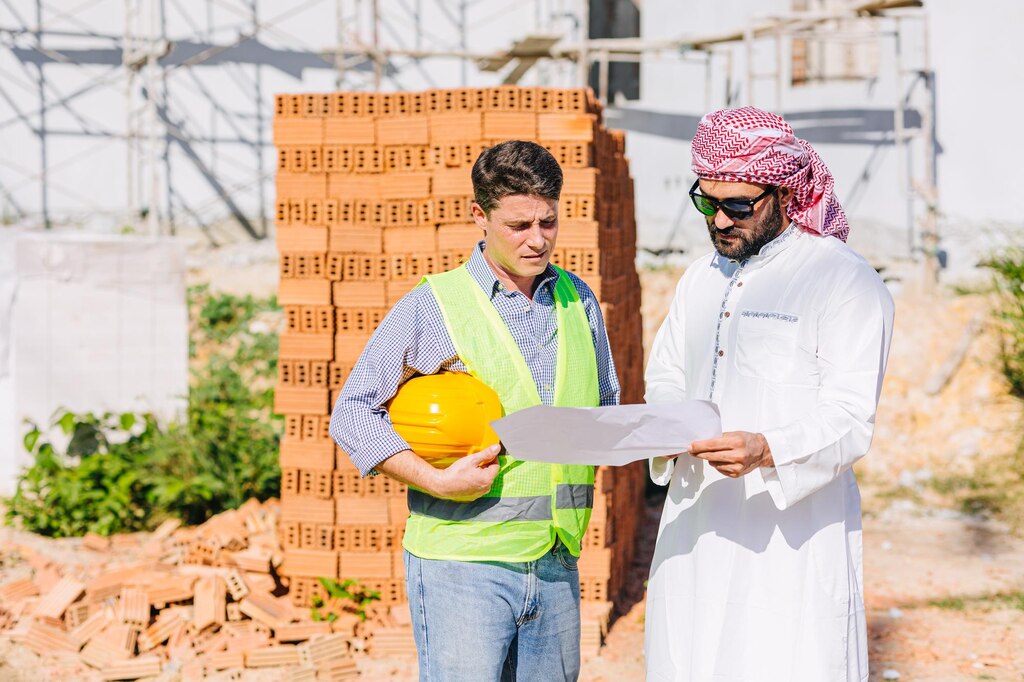
Construction Project Management in Iraq: Practical Planning and Cost Control for Reliable Delivery
- Prevent delays early by defining scope, stakeholders, and decision rights (who approves what, and by when).
- Plan for Iraqi realities (permits, utilities, logistics, holidays, and imported material lead times) instead of relying on generic templates.
- Control progress weekly with look-ahead planning and constraint removal, not only monthly reporting.
- Protect the budget with clear cost baselines, committed-cost tracking, and documented change orders as work happens.
- Finish cleanly by starting commissioning, QA/QC, and closeout documentation early, zone by zone.
These five actions work together: early governance prevents late changes, realistic planning reduces surprises, weekly control keeps the site moving, cost discipline protects cash and scope, and early closeout planning avoids handover panic.
For enterprise and mid-market buyers, construction project management in Iraq is ultimately about reliability: predictable schedules, controlled costs, consistent quality, and clear accountability across multiple stakeholders. This article outlines a practical framework that matches how projects actually run in Iraq, including permits, logistics, utilities, imported materials, and changing site conditions.
Why projects slip in Iraq and what “good management” looks like

In Iraq, projects rarely slip for one single reason. They slip because local realities hit at the same time: approvals that move slowly, site access that changes week to week, utility connections that arrive late, imported materials that sit at borders, labor productivity that varies by season and supervision, and scope changes that come after work has started. If these issues are not managed early, they lead to rework, idle crews, double handling of materials, and rushed decisions that reduce quality. The result is predictable: cost increases, schedule extensions, and tension between the client, consultants, and contractors.
Good project management is not about perfect paperwork. It is about making reliable decisions early and keeping execution steady on site. That is why construction project management in Iraq must be practical: a repeatable system that fits Iraqi permitting routes, logistics constraints, holidays, and site conditions, not a copied template that looks good in a report but fails in the field.
Recent signals from government and sector bodies point toward more formal governance, guidance, and standardization, including references to a national project management guide and unified building law direction. At the same time, local research on quality control and delay factors shows the same pattern: weak early planning, unclear approvals, and inconsistent site control lead directly to delays and defects. The sections below translate those realities into clear steps for project planning in Iraq, schedule management in construction, construction cost control in Iraq, and project execution in Iraq.
Construction project management in Iraq: a lifecycle framework from pre-construction to handover
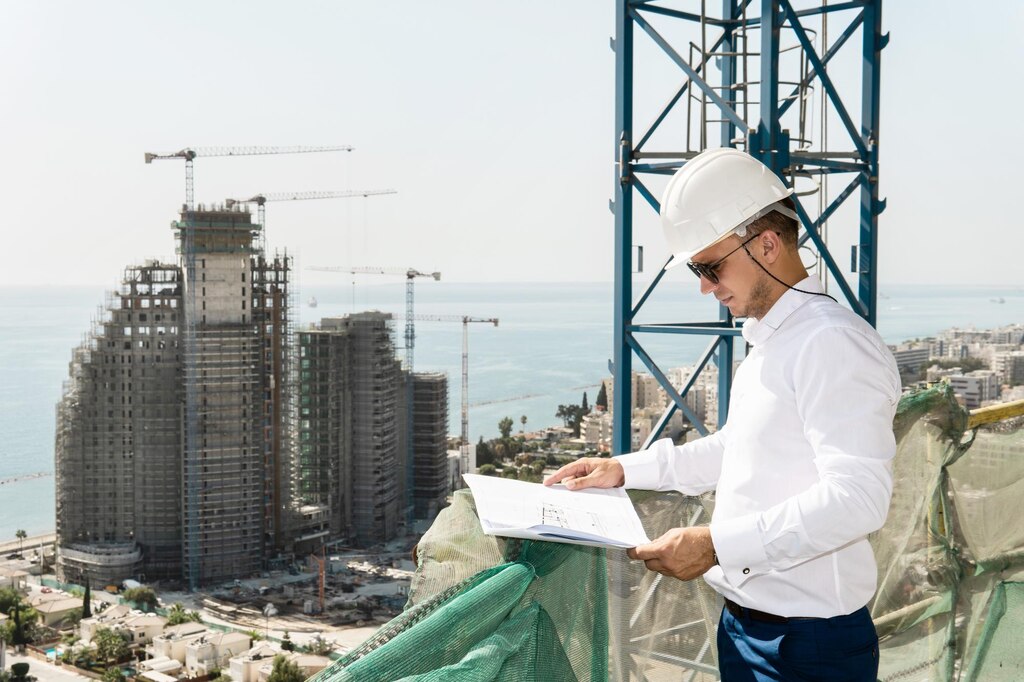
A reliable delivery method follows a simple lifecycle roadmap: feasibility, design coordination, procurement, execution, and commissioning and handover. Each phase has different decisions, and many failures happen when decision rights are not defined. Feasibility should confirm budget realism, land readiness, utility strategy, and procurement approach, not just concept drawings. Design coordination should lock requirements and reduce clashes before the first crew mobilizes. Procurement must match long-lead realities. Execution must run on weekly production control rather than waiting for monthly reporting. Commissioning and closeout need to start early so handover is smooth, not chaotic.
For enterprise buyers, the key question is ownership: who signs off requirements, who approves changes, who releases materials, and who accepts work. In Iraq, handoff risk is high when each stage is done by different parties with limited accountability between them. Aldhaman reduces this risk by operating as a full-service partner: contracting plus project management, supported by material import capability and worker accommodation. When one team owns the interfaces, from procurement timing to site readiness, there are fewer gaps where responsibility becomes unclear, and resequencing is faster when conditions change.
Define scope, stakeholders, and decision rights early
Scope problems usually show up as late changes, stalled instructions, and disputes over who approved what. The fix is straightforward, but it must happen early and in writing. A clear scope statement should define deliverables, what is excluded, and what the project assumes is available (land access, utilities, permits, client-provided equipment, and any nominated suppliers). Stakeholders must be mapped: client signatories, consultant authority, municipality or regulator touchpoints, and internal end users who can trigger changes. Decision rights should set who can issue site instructions, approve shop drawings, release payments, and approve variations, with time limits for responses.
This matters because approvals in Iraq can be sequential and depend on relationships, documentation completeness, and timing. If an approval route is unclear, the contractor often pauses to avoid rework, and the schedule loses momentum. If decision rights are too loose, the project receives conflicting directions and construction cost control in Iraq becomes difficult to maintain. A simple governance structure, clear sign-offs, meeting cadence, and documented instructions, reduces late change risk and protects quality.
Translate requirements into measurable quality and schedule targets
Many projects fail because requirements are written as general statements instead of measurable targets. Instead of “high quality finishes,” define the exact standard, mockup requirements, tolerances, and acceptance tests. Instead of “finish quickly,” define milestones that can be tracked weekly: foundations complete, structure topped out, MEP first fix, testing and commissioning readiness, and handover zones.
Measurable targets must connect to the schedule and the inspection plan. Every critical activity should have an acceptance checkpoint, and every checkpoint should have a responsible party and an approval timeframe. When clients and consultants agree early on what “done” means, weekly tracking becomes simple: what was planned, what was achieved, and what is blocking the next milestone. This is how quality and schedule become one delivery system, and a foundation for strong schedule management in construction.
Project planning in Iraq: how to build a plan that survives permits, logistics, and site conditions
A plan that looks right on paper often collapses on site because it ignores Iraqi realities. Realistic project planning in Iraq should include permitting paths, public holidays, seasonal weather effects, security or access constraints, and the real lead time for utilities and tie-ins. It must also recognize that logistics can become the critical path, especially when materials are imported or when local supply fluctuates.
A baseline plan should include site establishment needs, temporary power, water, storage, and access routes, because without these, the first weeks of mobilization are often unproductive. For enterprise buyers, transparency is essential: what assumptions are being made, what constraints exist, and which items could drive delays if they are not released early.
A simple planning checklist for shared visibility
Planning is not only the contractor’s job; it is a shared discipline between the client, consultant, and delivery team. A structured checklist helps decision-makers see risk early and give timely approvals.
- Assumptions register: land readiness, utilities, approvals, client-supplied items, and working hours
- Constraints log: access restrictions, security controls, municipal dependencies, and interface approvals that can stop work
- Long-lead list: imported or scarce materials, specialist equipment, and critical subcontract packages with required release dates
- Interface matrix: how civil, architectural, MEP, utilities, and external stakeholders connect, and who owns each interface
| Planning control tool | What it captures | Why it matters |
|---|---|---|
| Assumptions register | Land readiness, utilities, approvals, client-supplied items, working hours | Makes key dependencies explicit so approvals and support can be provided early |
| Constraints log | Access restrictions, security controls, municipal dependencies, interface approvals that can stop work | Creates an actionable list of blockers to remove before they impact site production |
| Long-lead list | Imported or scarce materials, specialist equipment, critical subcontract packages, required release dates | Protects schedule by pulling procurement decisions forward and avoiding late releases |
| Interface matrix | Connections between civil, architectural, MEP, utilities, external stakeholders, and ownership | Reduces handoff gaps where responsibility becomes unclear and work gets resequenced late |
When this checklist is maintained and reviewed regularly, the plan becomes a living control tool. It creates a clear executive view of what is pending, what is at risk, and what support the project needs. Most importantly, it reduces surprises, because surprises are what break budgets and schedules.
Baseline schedule and risk register (linked, not separate)
In many projects, the schedule is one document and the risk register is another, and neither changes how people behave on site. A stronger method is to link them. Every major risk should connect to a schedule activity, a mitigation action, an owner, and a deadline.
For example: if “utility connection approval” is a risk, it should appear as activities with clear durations and responsible parties, and the mitigation might include early submission, escalation routes, and temporary solutions. If “import delays” are a risk, the schedule should show ordering, customs clearance buffer, and delivery staging, not just “materials available.” This linkage creates accountability and turns reporting into action, not explanation.
Procurement planning for long-lead and imported materials
Procurement is often the real critical path in Iraq, especially for mechanical and electrical systems, elevators, specialist finishes, and branded equipment. A procurement plan should include lead times, approval cycles for submittals, customs and border buffers, and local transport to site. It should also define alternative specifications that meet performance requirements if the primary product becomes unavailable or delayed.
Aldhaman’s material import capability helps because procurement and construction sequencing are managed together. When the same team coordinates design approvals, material submittals, ordering, shipping, and on-site delivery, there are fewer gaps and fewer last-minute substitutions that create rework. Import planning should also include storage protection on site, because heat, dust, and handling conditions can create hidden losses.
Schedule management in construction: controlling progress with weekly production, not monthly reports
Monthly reports describe what already went wrong; weekly production control helps prevent it. The most reliable projects run a short-cycle rhythm: daily constraint removal, weekly look-ahead planning, and simple earned progress measurement. This keeps crews productive by ensuring workfaces are ready before labor arrives, materials are released before installation dates, and drawings are approved before fabrication.
Subcontractor management is central to schedule management in construction. Subcontractors perform best when outputs are clear, access is guaranteed, and handoffs are measurable. Instead of only tracking percent complete, track deliverables: meters of cable pulled, number of FCUs installed, rooms plastered and cured, panels tested, and snag items closed. When output metrics are tied to readiness checks, delays become visible early and can be contained before they cascade.
Look-ahead planning (2 to 6 weeks) to remove constraints
The look-ahead plan bridges the master schedule and daily site work by focusing on what must be ready before crews mobilize. A useful look-ahead is a readiness plan: can we build this next week, and if not, what is missing? It should be reviewed with the client and consultant when approvals are needed, and with procurement when materials are at risk.
Most look-ahead constraints fall into a small set of categories.
- Drawings and coordination: issued-for-construction status, resolved clashes, and updated detail references
- Approvals: submittals, RFIs, and site instructions with committed response dates
- Materials and equipment: release status, delivery dates, and backup options for critical items
- Workface readiness: access, scaffolding and temporary works, utilities, and area handover between trades
| Constraint category | What to confirm | Typical examples |
|---|---|---|
| Drawings and coordination | Ready-to-build information is issued and conflicts are resolved | Issued-for-construction status, resolved clashes, updated detail references |
| Approvals | Responses are committed and tracked to dates (not “in progress”) | Submittals, RFIs, site instructions with committed response dates |
| Materials and equipment | Critical items are released with clear delivery timing and contingencies | Release status, delivery dates, backup options for critical items |
| Workface readiness | The area is accessible, safe, and properly handed over between trades | Access, scaffolding and temporary works, utilities, area handover between trades |
For enterprise clients, this functions as an early warning system. If an approval is late, it becomes visible before it impacts site work. If a delivery is uncertain, the team can resequence or activate alternatives while maintaining productivity.
Field productivity and equipment utilization
Productivity is not only about worker effort. It is also about planning, supervision, and equipment availability. When crews arrive and wait for a crane slot, a generator, scaffolding, or access clearance, productivity drops and costs rise. Tracking equipment utilization and downtime shows whether sequencing is realistic and where bottlenecks are forming.
Aldhaman’s differentiator, owning heavy machinery and a workforce of over 1,800, reduces reliance on uncertain third-party availability. This does not replace planning; it strengthens it by giving the project real options when conditions change, such as accelerating a critical zone or recovering time after an approval delay.
Construction cost control in Iraq: practical cost discipline from estimate to final account

Cost control is often treated as an accounting exercise, but on a construction site it is a management discipline. The simplest effective system focuses on four areas: a clear budget structure, committed costs, cash flow timing, and controlled change management. In Iraq, price volatility and supply uncertainty make cost visibility even more important, because a delay can become a direct cost increase.
Decision-makers need to see where the budget is exposed, what is already committed, and what the likely final cost will be if trends continue. Practical construction cost control in Iraq depends on connecting site reality to the numbers: consistent measurement of progress, documented changes as they occur, and forecasts updated based on real productivity and procurement status.
Cost baseline, commitments, and variance reporting
A strong cost baseline breaks the budget into work packages that match how the project is built: earthworks, structure, blockwork, finishes, MEP systems, external works, and provisional allowances. Commitments should be recorded as soon as purchase orders or subcontracts are placed, not when invoices arrive.
Actual costs track payments and delivered value. Forecast-to-complete estimates what remains based on productivity and market conditions. The difference between baseline and forecast is the variance, and it should be reviewed regularly with clear thresholds for action. For enterprise buyers, variance reporting should be decision-focused: what changed, why it changed, and what corrective action will happen next.
Change orders and claims: documenting reality on site
Change is normal, but unmanaged change is where projects lose control. The key is to document reality as it happens and keep the approval chain active. Site instructions should be written, RFIs should be tracked with response dates, and daily logs should record manpower, activities, disruptions, and key events. Photos and measured work records provide objective evidence when scope or conditions differ from the contract baseline.
When documentation is consistent, change orders can be priced and approved quickly, avoiding end-of-project disputes. In Iraq, where scope changes may come from evolving user needs or regulatory updates, this discipline keeps the project fair, transparent, and easier to close financially.
Project execution in Iraq: site setup, accommodation, quality control, and safe delivery
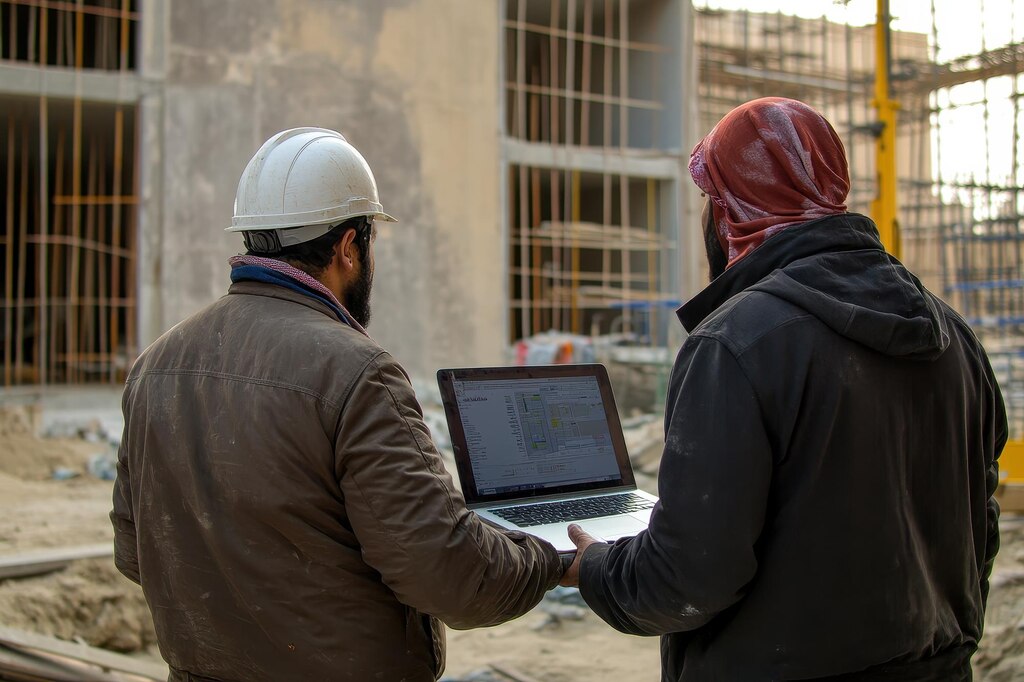
Execution is where planning becomes either real progress or daily firefighting. Execution readiness means the site is set up to produce work safely and consistently: mobilization is planned, temporary works are ready, utilities are arranged, storage is protected, and access routes are workable. It also means inspections are integrated into the workflow so quality is built in, not checked at the end.
In Iraq, project execution in Iraq must fit the actual site context, including dense urban constraints, remote locations, variable utility availability, and changing access conditions. Aldhaman’s integrated services support steadier execution, particularly through worker accommodation and combined delivery ownership. Stable accommodation reduces absenteeism, improves shift planning, and strengthens safety and quality consistency because supervision is continuous.
Mobilization and logistics that fit Iraqi sites
Mobilization should be treated as a production phase, not a quick start. The site needs defined laydown areas, protected storage for sensitive materials, and clear internal traffic routes to reduce congestion and accidents. Delivery planning must consider local road conditions, peak traffic hours, and the practical ability to unload and store without double handling.
In remote sites, the plan should include fuel, backup power, water supply strategy, and maintenance support for critical equipment. In dense areas, staging is often the limiting factor, so sequencing deliveries and installation is essential. Logistics directly affects cost and quality: poor storage leads to damaged materials, rework, and delays, while unplanned deliveries increase safety risks.
Quality control built into the workflow (not inspected at the end)
Quality control works best when it is a routine part of production, with clear hold points and simple records. Instead of waiting until the end to discover defects, inspections should be scheduled at critical stages: reinforcement before concrete, waterproofing before covering, pressure testing before closing ceilings, and functional testing before handover.
Hold points should be agreed early with the consultant and client so there is no confusion about when work can proceed. Records do not need to be complicated, but they must be consistent: inspection requests, test results, nonconformance reports, and closure evidence. When quality control is built into the schedule and measured weekly, it reduces rework, one of the biggest hidden cost drivers in construction.
Handover and closeout without last-minute chaos
Handover becomes chaotic when commissioning, documentation, and training are treated as end tasks. A smoother approach is to plan commissioning readiness by system and by zone, starting months before final completion. As-builts should be updated progressively, and O&M manuals should be compiled as equipment is installed and tested.
Snagging works best when it is continuous: close issues while the area is active, not after teams demobilize. For enterprise facilities, training and operational readiness are as important as physical completion, especially for MEP-heavy buildings. A reliable closeout process shortens the time between practical completion and real use, reduces post-handover disruptions, and protects the investor by making the project’s value easier to verify and operate.
Frequently Asked Questions about construction project management in Iraq
What is the biggest difference between construction project management in Iraq and in more predictable markets?
The biggest difference is that many schedule and cost drivers in Iraq are interface-driven: permits, utility tie-ins, access changes, border and customs timing for imports, and multi-party approval chains. In more predictable markets, a contractor can often rely on stable utility timelines, consistent supply chains, and standardized approval processes. In Iraq, a plan must include explicit decision rights, realistic buffers for long-lead items, and a weekly constraint-removal routine so external dependencies are surfaced early and managed actively rather than discovered late.
How can a client reduce delays caused by approvals and late decisions?
Delays from approvals usually happen when “who decides” and “how fast” are unclear. Clients can reduce this risk by setting decision rights at the start (who approves drawings, variations, materials, and payments), agreeing response timelines (for example, committed turnaround times for RFIs and submittals), and keeping a visible decision log that shows what is pending and what it is blocking on the schedule.
In practice, this works best when approvals are tied to the look-ahead plan: if an approval is needed in two weeks to keep a workface ready, it should be raised now with an owner and a due date. This turns approvals into a managed workflow instead of an argument after the site stops.
What should be included in a realistic project planning baseline schedule for Iraq?
A realistic baseline schedule should include more than construction activities. It should reflect permitting paths, holidays, seasonal weather constraints, site establishment (temporary power and water, storage, access), and utility connection strategy. It should also include procurement logic: submittal and approval cycles, ordering, customs clearance buffers, delivery staging, and installation sequencing for long-lead systems such as MEP equipment, elevators, and specialist finishes.
To keep the baseline useful, connect it to a risk register so each major risk has a mitigation action, an owner, and a deadline that appears in the schedule. That link is what makes the schedule resilient under real Iraqi conditions.
How does weekly look-ahead planning improve schedule management in construction?
Weekly look-ahead planning improves schedule control by focusing on readiness rather than percentages. Instead of asking “are we on track,” it asks “can we actually build what the schedule says next week?” That forces the team to confirm that drawings are issued, approvals are in place, materials are released, and the workface is accessible before crews arrive.
When this is done consistently, stoppages reduce because constraints are removed earlier. It also improves collaboration: client and consultant approvals and procurement actions are pulled forward and linked to a real short-term window, which makes commitments clearer and delays harder to hide.
What are the essentials of construction cost control in Iraq for enterprise projects?
The essentials are visibility and discipline: a clear cost baseline by work package, committed-cost tracking as soon as purchase orders and subcontracts are placed, accurate progress measurement, and controlled change management with written instructions and priced variations. In Iraq, this matters even more because delays and procurement disruption can quickly turn into direct cost increases due to price volatility and expedited logistics.
A practical enterprise approach is to review cost variance regularly with action thresholds (for example, when a package exceeds a certain variance or a delayed material threatens cost). The goal is early correction while options still exist, not late discovery when the budget has already drifted.
When should commissioning and closeout start on projects in Iraq?
Commissioning and closeout should start early, often months before final completion, planned by system and by zone. This means building a commissioning readiness plan that aligns with installation progress, scheduling tests before ceilings and finishes close access, and compiling documentation progressively (as-builts, test certificates, O&M manuals) as equipment is installed and verified.
Zone-by-zone closeout prevents the “all at the end” bottleneck where teams are demobilizing while snagging and documentation are still incomplete. For clients, early closeout planning shortens the gap between practical completion and real operation, and reduces post-handover disruption.
How do imported materials affect construction schedules in Iraq?
Imported materials can become the critical path because delivery depends on approvals, supplier production slots, shipping timelines, border and customs processes, and local transport to site. To reduce risk, treat imports as a managed workflow: lock specifications early, plan submittal and approval timing, include realistic clearance buffers, and define approved alternatives that meet performance requirements in case of disruption.
What reporting should an enterprise client request to keep a project under control?
Ask for short-cycle reporting that drives action, not only monthly summaries. A good weekly pack typically includes a two to six week look-ahead with constraints, a decision and approvals log with due dates, procurement status for long-lead items, measurable progress outputs by trade, a cost report showing baseline versus committed versus forecast, and a clear list of risks with owners and deadlines.
Aldhaman builds in Iraq with a simple promise: trust, safety, and quality, delivered on time through clear planning and disciplined execution. If you are planning a large residential, commercial, industrial, or facility project and want a delivery partner who can manage construction, project controls, material import, and workforce stability under one accountable team, talk to us. Share your project goals, location, and timeline, and we will help you define a practical plan that can survive real site conditions and deliver reliably.