



Design and Build Iraq Guide: Integrated Design and Construction for Faster, Lower-Risk Delivery
- One accountable team for design, procurement, and construction, with fewer coordination gaps and disputes.
- Faster schedules through controlled overlap, including early packages and long-lead procurement planned from the start.
- More predictable cost because design decisions reflect real site, supply, and logistics conditions.
- Lower risk under Iraq conditions when permits, imports, and site readiness are managed as one delivery plan.
- Better delivery reliability for partners by aligning approved drawings, material availability, and installation dates.
These benefits depend on one thing: a delivery partner that can truly coordinate design decisions with procurement timing and on-site execution, so the schedule is driven by real constraints, not assumptions.
In Iraq, project schedules are tight, stakeholders are many, and small coordination gaps can become expensive delays. That is why design and build Iraq is gaining ground: it reduces handoffs, clarifies accountability, and helps teams make decisions faster with cost and construction realities in view. For channel and project delivery partners such as contractors, integrators, distributors, and resellers, this model can also simplify your delivery chain because one team can align design, procurement, and site execution from day one.
Instead of managing separate consultants and contractors with separate priorities, you work with an integrated team that owns outcomes, timing, and quality. This guide explains how integrated design and construction works in practice, what to check before you sign, and how to reduce risk in procurement, scope, and contracts under Iraq conditions.
Why integrated design and construction is growing in Iraq
The market is moving toward integrated design and construction because it matches what owners and investors need: speed, predictable cost, and fewer disputes. Traditional design bid build often creates long waiting periods between design completion, tendering, and contractor mobilization, and it leaves room for misinterpretation between drawings and site realities. In Iraq, where import lead times, permit timing, and site readiness can change quickly, those gaps add risk.
With a design and build Iraq approach, engineering decisions are made with procurement and construction input, so you get fewer reworks and fewer surprises after award. The result is faster delivery and more stable planning for supply, workforce, and equipment.
For B2B delivery partners, design build also changes how procurement and delivery models are structured. In private-sector projects, it can be contracted as a single point of responsibility from concept to handover, with defined milestones for design releases, procurement, and construction packages. In public-sector or tender-based work, design build may follow specific Standard Bidding Document frameworks, including clear requirements for submissions, performance obligations, and acceptance criteria.
Either way, the expectation is the same: your delivery partner can control both the paper side (design, approvals, specifications) and the field side (workforce, methods, safety, schedule). When that control is real, not just promised, partners reduce coordination load and can focus on overall program delivery.
When design build is the right fit (and when it is not)
Design build is a strong fit when time, coordination, and cost control matter more than splitting scope across multiple contracts. In Iraq, it often works best for residential compounds, commercial buildings, mixed-use developments, and fast-track programs where phased design releases can start procurement and site works early.
It also suits projects where the owner wants one accountable team to coordinate architectural, structural, and MEP decisions with actual supply availability and construction sequencing. If the project has common constraints such as limited site access windows, utility coordination, or tight community expectations, an integrated team can reduce interfaces and keep decisions moving. For channel partners, it is especially valuable when you must commit to delivery dates and need reliable stock planning and fast fulfillment tied to approved designs.
Separate contracts may be safer when core inputs are unstable. If the scope is not defined and the owner is still changing core requirements, design build can become a cycle of revisions that damages schedule and cost certainty. Unstable funding also increases risk because procurement and workforce planning depend on predictable payments and approvals. Projects with unclear site access, unresolved permits, or uncertain land status are another red flag.
In those cases, a staged approach, early design under one contract and construction under another, may provide clearer control until the project is ready.
How design and build Iraq works in practice (step-by-step delivery)
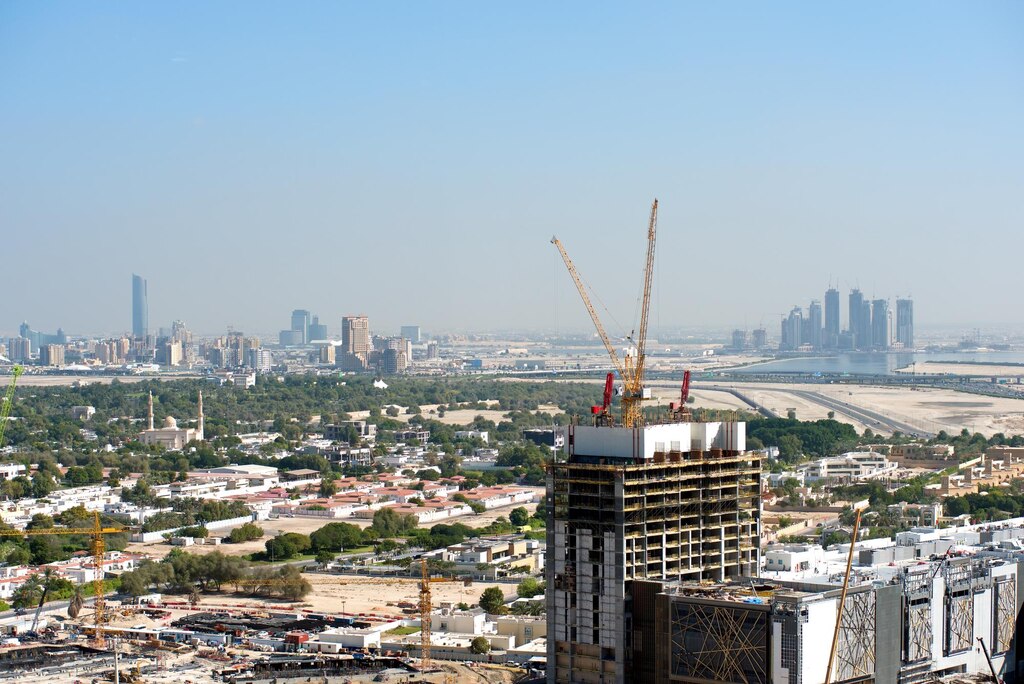
A practical design build delivery model follows a clear sequence, with controlled overlap to save time. The concept phase aligns the client’s goals, budget range, site constraints, and performance needs, and it sets the decision-making structure that will be used throughout the project. Design development then turns the concept into coordinated plans, with early engineering input to avoid conflicts between architecture, structure, and MEP.
Next comes detailed engineering and shop-drawing preparation, where constructability is checked and materials are aligned with availability and specification. Costing is not a one-time activity; it runs in parallel through checkpoints so scope and budget stay aligned before procurement commitments are made.
Procurement planning starts early by identifying long-lead items, often MEP equipment, facade systems, elevators, and special finishes, and confirming approved vendors or alternatives. Construction begins with enabling works, site logistics, and method statements that match safety requirements and site realities. Commissioning and testing validate that systems perform as specified, especially for MEP-heavy buildings where handover quality affects long-term operations.
Finally, handover includes documentation, training, and closeout so the owner can operate the asset confidently. The key advantage is a single point of accountability: decisions flow from the owner to one delivery partner, then through an integrated team that coordinates design, procurement, and site execution without waiting for separate contract boundaries.
| Delivery phase | What happens in practice |
|---|---|
| Concept | Align goals, budget range, site constraints, performance needs, and decision-making structure. |
| Design development | Turn concept into coordinated plans with early engineering input to reduce conflicts across architecture, structure, and MEP. |
| Detailed engineering & shop drawings | Check constructability; align materials with availability and specification; keep costing running through checkpoints. |
| Procurement planning | Identify long-lead items (often MEP equipment, facade systems, elevators, special finishes); confirm approved vendors or alternatives. |
| Construction | Start enabling works, site logistics, and method statements that match safety requirements and site realities. |
| Commissioning & testing | Validate systems perform as specified, especially in MEP-heavy buildings. |
| Handover | Deliver documentation, training, and closeout so the owner can operate confidently. |
Roles and responsibilities inside the integrated team
Clarity on roles is what makes design build stable, especially in multi-stakeholder projects. The client or owner sets requirements, approves key decisions, and provides timely access to site and permits where applicable. The project delivery partner coordinates the full process, manages risk, and controls the interface between design intent, cost, schedule, and construction execution. Architects and engineers develop solutions that meet performance needs, local codes, and constructability constraints, while keeping the design coordinated across disciplines.
The general contractor function, whether internal or managed under the same umbrella, owns site methods, sequencing, safety implementation, and daily productivity. Suppliers and subcontractors must align with the design release plan so procurement does not run ahead of approvals or fall behind schedule. Site management is responsible for daily coordination, quality checks, and reporting so decisions are made before issues grow.
A steady communication rhythm is essential: regular design reviews ensure alignment with the owner’s intent, cost checkpoints confirm affordability, and site coordination meetings keep interfaces clean. In Iraq, this structure is most effective when the delivery partner can also control logistics and material flow, not only the drawing set.
Selecting a design build contractor Iraq: what to check before you sign

Choosing a design build contractor Iraq is not only about price; it is about execution reliability and the ability to protect your schedule and reputation. As a channel or delivery partner, you need confidence that the contractor can manage design coordination, procurement realities, site logistics, and safety under local conditions.
Capability matters: technical competence in architectural design Iraq and engineering design services Iraq, a proven construction system, and quality control that is documented and repeatable. Capacity matters too: enough workforce and machinery to deliver without depending on uncertain subcontract availability. Financial stability is another practical requirement because material procurement and mobilization depend on cash flow discipline and predictable planning.
Before signing, ask for proof points that show how the contractor actually delivers. Request project references with comparable scale and complexity, including contactable stakeholders where possible. Ask for method statements that explain how key activities will be executed and inspected, not only a schedule chart. A resource plan should identify the proposed staffing approach, supervision structure, and productivity assumptions, including how the contractor will ramp up manpower. A machinery list should clarify what is owned versus rented, because owned capacity often means fewer stoppages. Review QA/QC and HSE systems to confirm that quality and safety are managed as standard practice, not as paperwork prepared for tender.
Capacity and execution proof (machinery, workforce, and logistics)
In Iraq, downtime is expensive because it compounds across trades and can stall procurement and inspections. Contractors that own heavy machinery reduce dependence on rental availability and reduce the risk of schedule gaps caused by equipment shortages. A large, stable workforce also reduces reliance on ad hoc subcontracting, which can create inconsistent workmanship and unpredictable attendance.
When a contractor can self-perform more work with trained teams, sequencing becomes easier to control and quality becomes easier to standardize. This is one of Aldhaman’s practical differentiators: we operate with our own heavy machinery and over 1,800 workers, which strengthens continuity on fast-track programs.
Logistics is not only about trucks and deliveries; it includes worker accommodation, site support, and daily productivity conditions. When worker housing and on-site support are planned and managed, the project is less exposed to attendance issues, travel delays, and inconsistent shift coverage. That stability matters for partners who must align installation dates, material releases, and downstream commissioning with minimal disruption. Strong logistics also supports safety because fatigue and rushed work increase risk on active sites.
An integrated delivery partner that plans workforce welfare and site support as part of execution is more likely to keep pace without sacrificing quality.
Scope clarity: architectural design Iraq and engineering design services Iraq in one contract

One of the biggest advantages of design and build Iraq is having architectural design Iraq and engineering design services Iraq under one contract, but that advantage only holds when scope is written clearly. The design scope should specify architectural, structural, and MEP responsibilities, plus the coordination outputs that construction needs, such as shop drawings and builder’s work requirements.
It should also include value engineering rules: what can be optimized, who approves substitutions, and how performance will be protected. Approvals support is another critical point in Iraq, because timelines often depend on timely submissions, clarifications, and document control. When these items are vague, change orders grow and the schedule becomes a negotiation instead of a plan.
To prevent scope gaps, define performance specifications and a clear deliverables list early. Performance specs reduce arguments about equivalent materials by stating what the system must achieve, not only what it should look like. A staged design freeze at concept, design development, and construction issue helps keep decisions moving while preventing late redesign that disrupts procurement. It also protects channel partners because it ties purchasing commitments to approved documents and realistic lead times.
The goal is straightforward: make scope measurable so cost, schedule, and quality can be managed with fewer assumptions.
Design deliverables that protect schedule and quality
Deliverables are the bridge between design intent and site production, so they need to be complete, coordinated, and released at the right time. At minimum, the project should define what constitutes each drawing level, concept, design development, tender or construction issue, and what coordination is required at each stage.
If BIM is used, it should be tied to specific outputs: clash detection reports, coordinated models, and clear model ownership across disciplines. Technical specifications should be written in a way that supports procurement, including approved manufacturers, testing requirements, and acceptance standards. Coordinated MEP layouts and material schedules are especially important because they drive long-lead procurement and prevent rework in ceilings, shafts, and plant rooms.
To keep governance strong while still moving fast, many partner-led projects use a small set of practical controls:
- Design review gates linked to procurement release so purchase orders follow approved IFC documents or approved submittals.
- Construction release packages by area or floor to support fast-track sequencing without coordination gaps.
- Cost checkpoints at each design stage with documented decisions and approved alternates.
- Shop drawing and submittal timelines linked to the site schedule, including response times and escalation rules.
| Control | Purpose |
|---|---|
| Design review gates linked to procurement release | Ensure purchase orders follow approved IFC documents or approved submittals. |
| Construction release packages | Release work by area or floor to support fast-track sequencing without coordination gaps. |
| Cost checkpoints | Confirm affordability at each design stage with documented decisions and approved alternates. |
| Shop drawing and submittal timelines | Tie submissions, response times, and escalation rules to the site schedule. |
These controls reduce friction because everyone knows when decisions must be made and what information is required to proceed. They also protect quality by preventing partial or uncoordinated releases from reaching the site.
Materials, procurement, and compliance, especially when importing
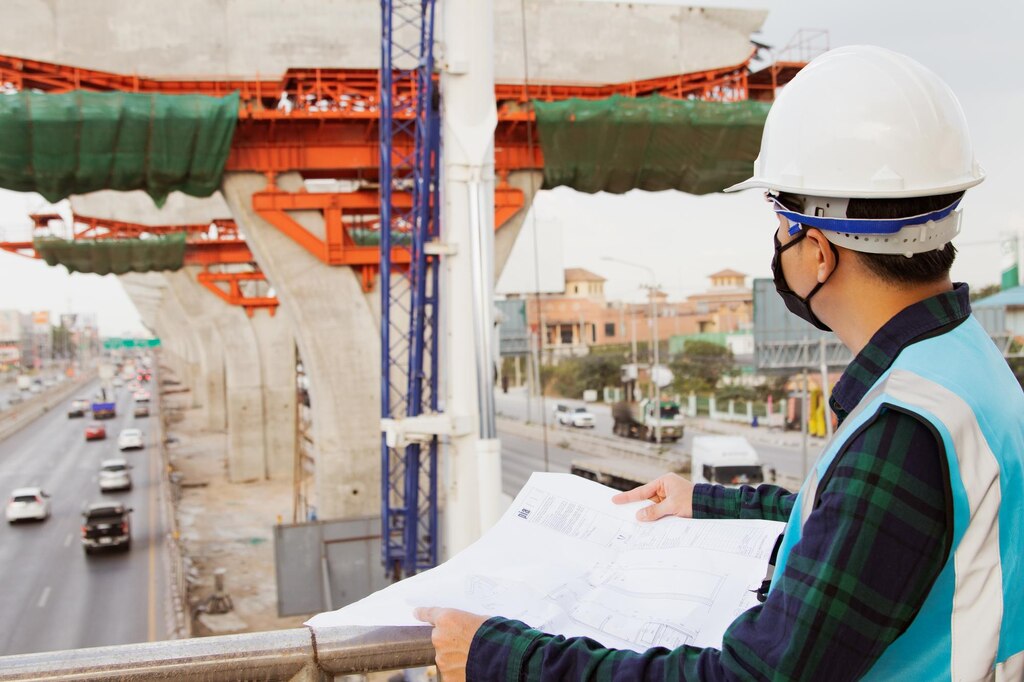
Procurement is often the difference between a planned schedule and a delayed one, especially when projects rely on imported systems. Good planning starts with identifying long-lead items early and confirming technical compliance before money is committed. Approved vendors and alternates should be defined in a way that protects performance while allowing flexibility when supply shifts.
Quality checks must be planned as part of procurement, not only at site delivery, because factory documentation, certificates, and pre-shipment inspections can prevent costly rejections. For partners, procurement planning is also about visibility: knowing what will arrive, when it will arrive, and what approvals are still pending.
Importing materials into Iraq requires realistic lead times and disciplined documentation. Customs processes, country-of-origin documentation, and technical compliance papers can add time if they are handled late or inconsistently. Coordination between procurement teams, freight forwarders, and site needs to be continuous so deliveries match installation windows and storage capacity. When supply is inconsistent, projects suffer delays and quality variation if teams are forced to accept unplanned substitutions.
Aldhaman’s full-service model includes material import, which helps reduce interface risk for partners who need reliable stock availability and fast fulfillment aligned with the construction schedule.
Reducing procurement delays with one accountable partner
Integrated teams reduce procurement delays by aligning design choices with what can be sourced locally and what must be imported, then locking decisions at the right time. When design and procurement are managed together, specifications can reflect real availability without lowering standards, and alternates can be approved early rather than negotiated under pressure.
This alignment also supports better cash flow planning because procurement commitments follow agreed milestones and documented design gates. For channel partners, the advantage is fewer moving parts: one team coordinates approvals, ordering, logistics, and on-site delivery sequencing. When the delivery partner can handle importing materials as part of the contract, you avoid the common problem of split responsibility, where design blames supply and supply blames design, while the schedule slips.
Contract risk in Iraq: pricing, variations, and payment terms (practical safeguards)

Contracts in Iraq need to balance speed with protection against common risks: scope drift, late approvals, import delays, and payment uncertainty. Lump sum can work well when scope is clear and design is sufficiently developed, because it gives the owner cost certainty and pushes the team to manage efficiency. Guaranteed Maximum Price can be effective when the project is fast-tracked and some scope will be refined, because it creates a cap while allowing controlled development. Unit rates may suit infrastructure-style work or projects with uncertain quantities, but they require strong measurement and supervision to avoid disputes.
The right model depends on how stable the scope is, how predictable procurement will be, and how quickly decisions can be approved.
Safeguards should be written plainly and managed actively. A short set of clauses typically carries the most impact:
- Change order rules defining what triggers a variation, how it is priced, and response times for approval.
- Schedule protections covering excusable delays, acceleration rules, and responsibilities for permits and site access.
- Quality and warranty terms stating inspection points, defect liability period, and system performance requirements.
- Acceptance and dispute process with measurable handover tests, documentation requirements, and escalation steps.
These safeguards help partners maintain delivery confidence and protect relationships with end clients. In design build, the goal is not to eliminate change; projects evolve, but it should be controlled with a clear process that keeps decisions timely and documented.
How to structure milestones and reporting for partner-led projects
Strong reporting makes design and build Iraq predictable, especially when channel partners are coordinating multiple packages and stakeholders. Milestones should be tied to real deliverables: approved design gates, procurement commitments, completed structural frames, MEP rough-in completion, testing and commissioning, and handover readiness.
Reporting cadence should be consistent, weekly for site progress and constraints, monthly for cost-to-complete and procurement status, so issues are visible early. Earned progress measures help avoid optimistic reporting by linking progress to measurable outputs, not only time elapsed. Cost-to-complete tracking should include committed costs, forecast changes, and approved variations so partners can manage exposure before it becomes a problem.
Handover requirements should be defined from the beginning because they affect how work is documented during execution. As-builts need a clear format and submission timeline, not an end-of-project scramble. Commissioning should include system tests, balancing where required, and demonstration of performance against specifications. Training should be planned for the owner’s team, especially for building systems that need correct operation to avoid early failures. Closeout documentation, warranties, certificates, test reports, and O&M manuals, should be a contractual requirement tied to final acceptance.
When milestones and reporting are structured this way, partner-led projects run with fewer surprises and smoother final delivery.
Frequently Asked Questions Related to design and build Iraq
What is design and build in Iraq, and how is it different from design bid build?
In design and build Iraq, one delivery partner is responsible for both the design work and the construction work under a single contract. That means design decisions are made with procurement and site execution in mind, and the same team coordinates drawings, approvals, material ordering, and installation sequencing.
In design bid build, the owner typically contracts a designer first, then tenders the project to a separate contractor. That separation can work, but it often creates handoff risk: design intent may not match real site conditions, and the contractor may need clarifications or redesign after award. In Iraq, where permits, imports, and site readiness can shift, design build is often chosen because it reduces those gaps and speeds up decision-making.
How does design and build reduce risk on projects in Iraq?
Design build reduces risk mainly by reducing interfaces. When one team owns design coordination, procurement planning, and construction execution, it becomes harder for problems to fall between contracts. For example, if an MEP item has a long lead time, the design and procurement plan can be locked early, alternates can be pre-approved, and installation dates can be coordinated with the structural and architectural sequence.
This matters in Iraq because schedule risk is often driven by coordination details: approval timing, import documentation, customs lead times, and site logistics. An integrated partner can plan these as one delivery system rather than treating them as separate responsibilities.
Is design and build suitable for fast-track projects in Iraq?
Yes, design build is commonly used for fast-track delivery because it allows controlled overlap. Instead of waiting for the full design package to finish, the team can release approved construction packages by area, floor, or discipline (for example, enabling works, foundations, or long-lead MEP equipment) while the rest of the design is finalized.
The key is governance: fast-track only works when design release gates, submittal timelines, and procurement approvals are clearly defined. Without that structure, speed can create rework. With the right controls, fast-track design build can shorten timelines while keeping quality and compliance intact.
What should I check before hiring a design build contractor in Iraq?
Start with proof of execution, not only proposals. Ask for comparable project references, clarity on who is responsible for architectural and engineering coordination, and a realistic procurement approach, especially for imported systems. Review QA/QC and HSE practices to confirm they are operational systems used on live sites, not documents prepared for tender.
Also check capacity: workforce stability, ownership of key machinery, and logistics planning (including worker accommodation and site support). In Iraq, these factors often determine whether a contractor can keep momentum when conditions change or when multiple trades must work in parallel.
How are price and variations usually handled in design and build Iraq contracts?
Pricing depends on how defined the scope is at the time of signing. If the design is sufficiently developed and deliverables are clear, lump sum can provide strong cost predictability. If the project will be refined while work is starting (common in fast-track programs), a GMP structure can cap the price while allowing controlled development.
Variations should be managed with a simple, written process: what triggers a change, how pricing is calculated, and how quickly approvals must be given. Practical examples include late changes to finishes, additions to MEP loads, or owner-driven layout changes after procurement has started. The healthier the change process, the less likely small revisions will accumulate into a major schedule and cost impact.
Aldhaman builds in Iraq with a simple approach: clear scope, disciplined execution, and honest reporting. If you are a distributor, contractor, integrator, or delivery partner looking for a reliable team for integrated design and construction, supported by our own machinery, a large workforce, worker accommodation, and material import, contact Aldhaman to discuss your pipeline, timelines, and the best design and build Iraq structure for your next project.